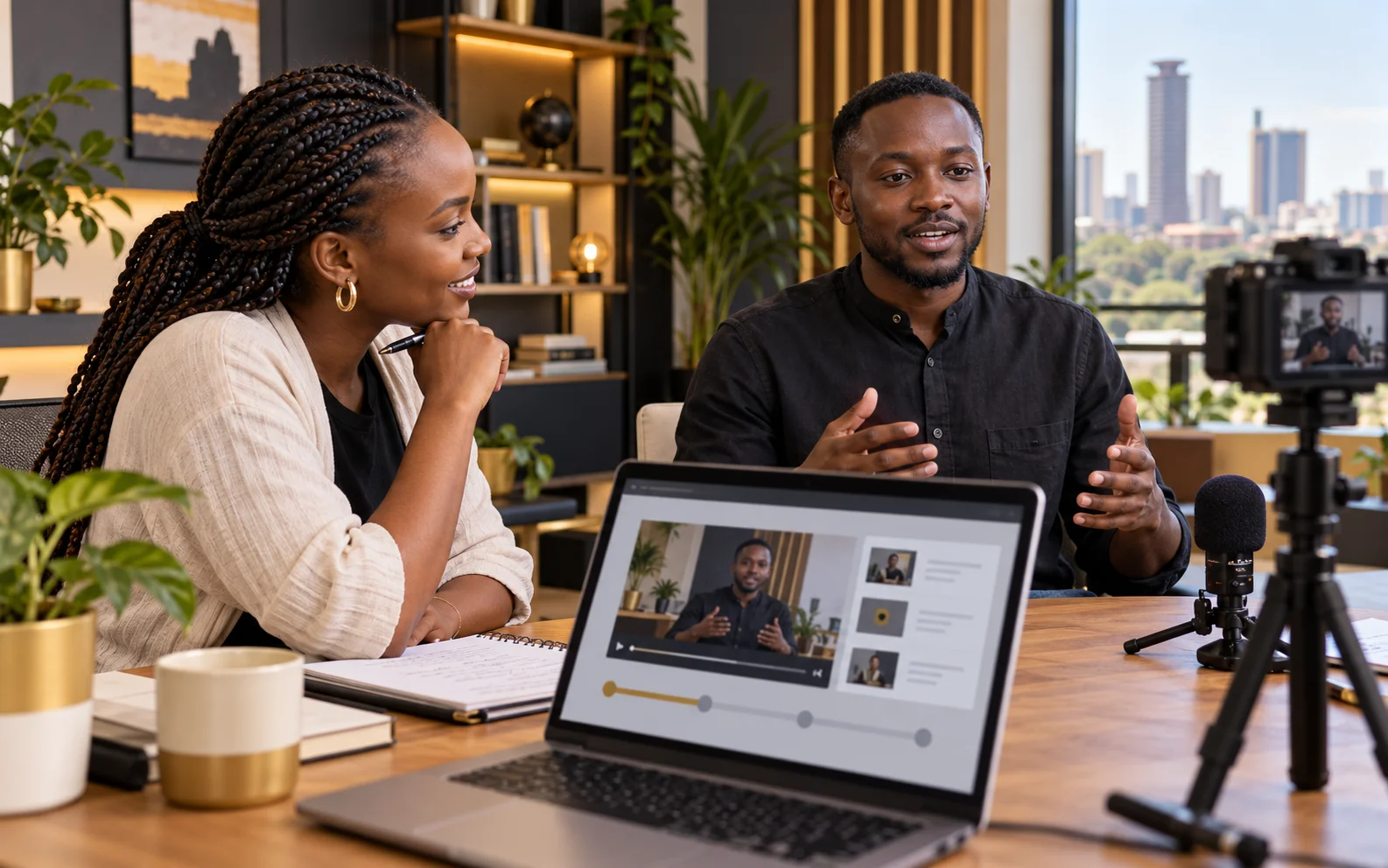

A working guide to choosing an audience, preparing useful content, and measuring enquiries without confusing activity with results.
The short version
Choose an action before choosing a platform.
Adapt the offer and contact journey to each audience.
Measure qualified enquiries and follow-up, not just clicks.
Start with one useful outcome
A campaign should make a specific customer action easier. For a Nairobi service business, that might be a qualified consultation request. For a Lilongwe training provider, it might be a request for a course outline. Write down the action before choosing platforms. A large audience is not automatically a useful audience, and impressions alone cannot tell you whether the campaign helped customers make a decision.
Build the brief around real customers
Visibility starts the conversation. A useful customer journey keeps it going.
Consider a fictional campaign for a Nairobi web studio expanding enquiries in Lilongwe. The objective is to start conversations with organisations that need a website and can describe a realistic brief. The following comparison is a planning example, not a claim about either market. Validate language, preferred contact methods, and buying processes with real customers.
Decision | Nairobi audience | Lilongwe audience |
|---|---|---|
Offer | A website enquiry with a clear scope | The same service, with locally relevant contact details |
Landing page | Relevant examples and the Nairobi contact route | Relevant examples and the Lilongwe contact route |
Follow-up | A named owner and agreed response hours | A named owner and agreed response hours |
Describe the person you want to reach, the problem they are trying to solve, and what would reassure them. Talk to sales or customer support about recurring questions. Use those questions to shape the offer and landing page. Treat Kenya and Malawi as distinct contexts: validate language, location, delivery arrangements, contact hours, and payment information for each audience instead of copying a single advertisement everywhere.

Make the journey match the promise
An advertisement for a website package should open a page about that package, not a broad company homepage. Show what is included, what information you need to quote, and how to contact the team. If WhatsApp is a contact option, assign someone to respond and keep the response consistent with the offer. Test the complete journey on a phone using a modest connection before launch.
Prepare a small content set
Create one clear offer, a short explanation, a useful example, and answers to common questions. Adapt the same idea to the formats your audience uses. Keep important text out of tiny image captions. Write alternative text for meaningful images and add captions to spoken video. Obtain permission before publishing a client name, testimonial, photograph, or result.
Measure enquiries that matter
Agree what makes an enquiry qualified: a relevant need, a suitable location, and enough information for a useful follow-up. Tag campaign links consistently and record the source in your enquiry process. Review cost per qualified enquiry alongside response time and eventual sales, where those records are available. Avoid treating platform-reported conversions and confirmed customers as interchangeable numbers.
Review and improve deliberately
Set a review date and compare results against the original goal. If clicks arrive but enquiries do not, examine the page and offer before increasing spend. If enquiries arrive but conversations stall, review follow-up. Change one important variable at a time so you can learn from the result. This is a planning example, not a promise of a particular reach, cost, or sales outcome.
Before you start
Agree the audience, deliverables, and owner.
Check examples against your own team’s context.
Review the work with the people who will use it.
Further reading and practical references
Use a consistent campaign naming convention. Google Analytics explains campaign URL parameters and how they identify incoming campaign traffic. Keep source, medium, and campaign names stable so reports remain interpretable.
For a WhatsApp enquiry route, follow WhatsApp’s official click-to-chat guidance. A working chat link makes contact easier; it does not establish consent for unrelated future marketing.
Put the plan into practice
Name the audience, deliverables, and owner.
Review the examples with the people doing the work.
Choose one improvement and agree when to evaluate it.
Have a brief you want to develop? Talk to Brookside about your project.
Written for practical planning. Adapt the examples to your organisation and review platform guidance before implementation.